Construction Dumpster Rental in Naples, FL for Remodels and Demolition
Call Now: (239) 778-9548 to rent a construction dumpster in Naples.
What a Construction Dumpster Handles
A construction dumpster handles the debris a remodel, addition, or demolition produces. The material splits into two kinds, and the split decides the size.
- Bulky, light debris — framing, drywall, cabinetry, flooring, and roofing underlayment.
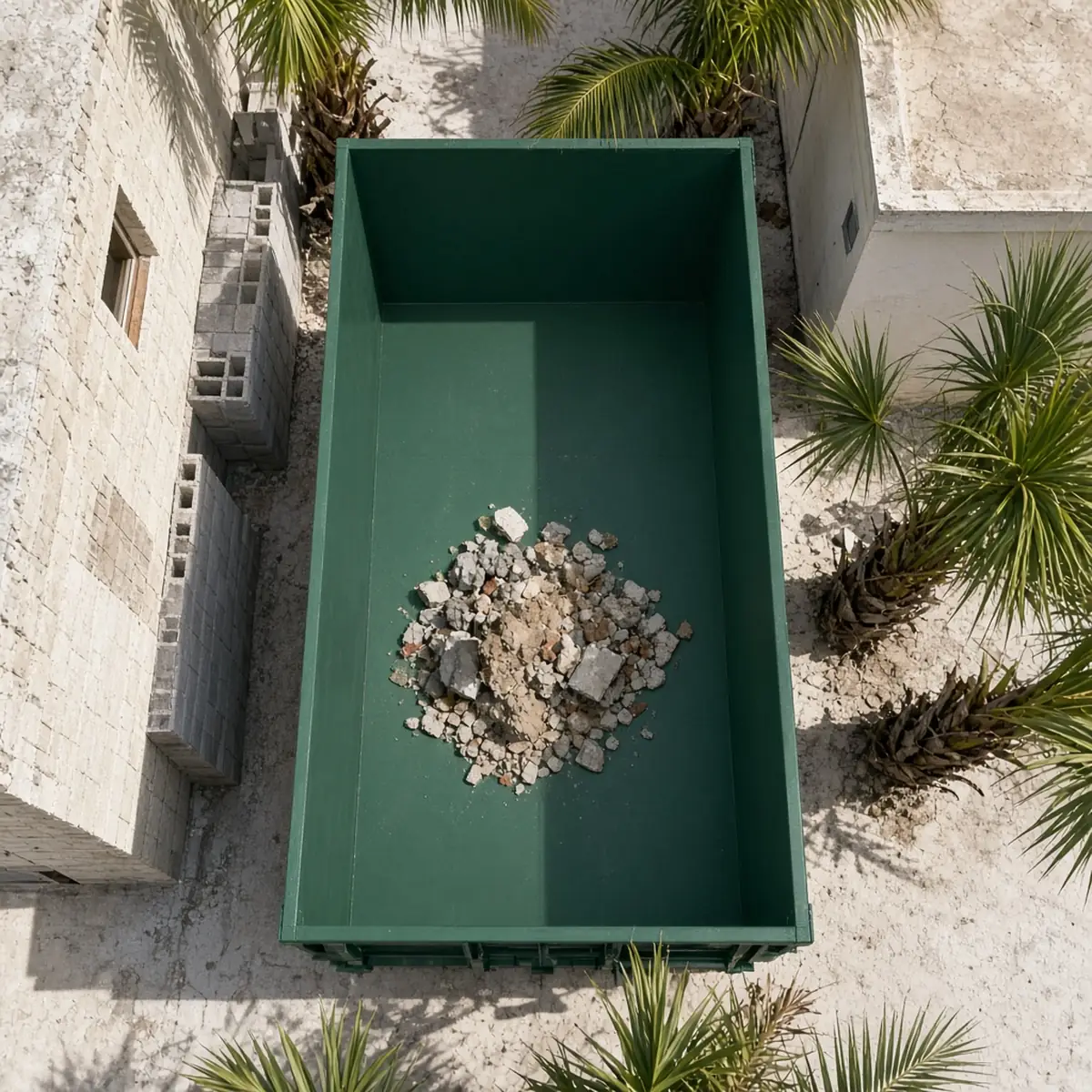
- Dense, heavy debris — concrete, block, tile, and dirt.
- Mixed demolition debris from a gut renovation.
- Addition and new-build offcuts and packaging.
- Tear-out material from a kitchen or whole-house remodel.
Bulky debris fills volume and suits a 30 or 40-yard; dense debris hits the weight limit fast and belongs in a 10-yard. Most jobs produce both, so sizing is a judgment call a provider makes from the material list.
Call Now: (239) 778-9548
How C&D Debris Gets Sized and Hauled
Construction debris gets sized by separating the heavy material from the bulky material. First, a provider asks what the demolition produces — whether it is a concrete-heavy slab and tile job or a lighter framing and drywall tear-out. Second, the heavy, dense debris is matched to a 10-yard, which carries concrete and tile within the weight limit. Third, the bulky material goes in a 30-yard or 40-yard, which holds framing and drywall by volume. Finally, the loads are hauled to the Collier County Landfill, which accepts construction and demolition debris, kept separate from any vegetative or hazardous material.
Call Now: (239) 778-9548
Why Naples Construction Needs the Right Container
Naples construction needs carefully sized containers because the local jobs run large and the debris runs dense. The aging housing stock — about 65.9% of homes built before 1990 per Census data — means most projects are gut renovations that strip a house to the studs, producing a high volume of mixed demolition debris.
The coast adds weight to the load. Many Naples homes are concrete block with tile roofs, so a demolition or re-roof turns up dense material that maxes out a container's weight limit well before it fills. A provider who sizes by the material rather than the project footprint keeps a heavy load in a 10-yard and a bulky load in a larger box, which avoids an overage charge and keeps the haul legal. For a multi-week build, swapping a container as it fills keeps the site clear without a single oversized box sitting idle.
Call Now: (239) 778-9548
What to Look for in a Construction Dumpster Provider
- Material-based sizing. A good provider separates heavy from bulky debris and sizes each correctly rather than dropping one big box for everything.
- Swap-out availability. On a long build, confirm the provider can rotate containers as they fill.
- Clear weight limits. Ask what tonnage is included so a concrete or tile load does not run over.
- Correct C&D routing. Construction and demolition debris goes to the Collier County Landfill, kept separate from vegetative and hazardous material.
- Proof of insurance. Current liability coverage is the signal that matters on a job site.
Work is performed by independent professionals.
Call Now: (239) 778-9548
Frequently Asked Questions
What size dumpster do I need for a construction project in Naples?
The size depends on whether the debris is heavy or bulky. Dense material like concrete, block, and tile belongs in a 10-yard because it hits the weight limit fast, while framing, drywall, and cabinetry go in a 30 or 40-yard that fills by volume. Most construction jobs produce both, so a provider may use two containers or a swap. Give the material list when you call — concrete versus framing versus mixed demolition — so each type is sized correctly.
Can I put concrete in a construction dumpster?
Concrete goes in a construction dumpster, but it needs its own 10-yard container because it is one of the heaviest materials on a job site. A larger box of concrete would exceed the legal haul weight, so providers keep concrete, block, and tile in the smallest size, loaded only partway. Some providers also ask that clean concrete stay separate from mixed debris so it can be recycled. Tell the provider the concrete volume when you call so the right box arrives.
How does construction debris disposal work in Collier County?
Construction and demolition debris from a Naples job site goes to the Collier County Landfill at 3730 White Lake Blvd, which accepts C&D material and runs Monday through Saturday. The debris is kept separate from vegetative waste and from household hazardous material, which go to different county streams. A provider hauls the loaded container to the landfill and handles the disposal, so the crew stays on the job instead of making runs to the scale house.
Can a contractor swap containers on a long job?
A contractor can swap containers on a long job — the provider hauls the full box and drops an empty, so the site stays clear through a multi-week build. This is more efficient than one oversized container that sits partly loaded, especially when the debris is dense and a smaller box fills by weight. Confirm swap availability and turnaround when you book so the schedule matches the build's pace.
What can't go in a construction dumpster?
A construction dumpster takes most building debris but not hazardous material — paint, solvents, adhesives, and sealants go to Collier County's Household Hazardous Collection Center, not a mixed load. Keep out tires, batteries, appliances with refrigerant, and electronics as well, since they have separate processing. Some providers also restrict loose asbestos and other regulated material, which needs licensed handling. Tell the provider what the demolition involves so regulated items are routed correctly before the container arrives.
Call Now for Construction Dumpster Rental in Naples
To rent a construction roll-off in Naples, call (239) 778-9548.
Ready to rent a roll-off dumpster in Naples?
One call gets the right size dropped where you need it and hauled to the correct Collier County facility when the job is done. Work is performed by independent professionals.